
People who did the job before teaching it.
KABUTO’s founder and trainers come from the armed forces, the Paris Fire Brigade and the Marseille Naval Fire Battalion. They all learned from books, then went to apply it in the field. It is the second part they come to pass on.
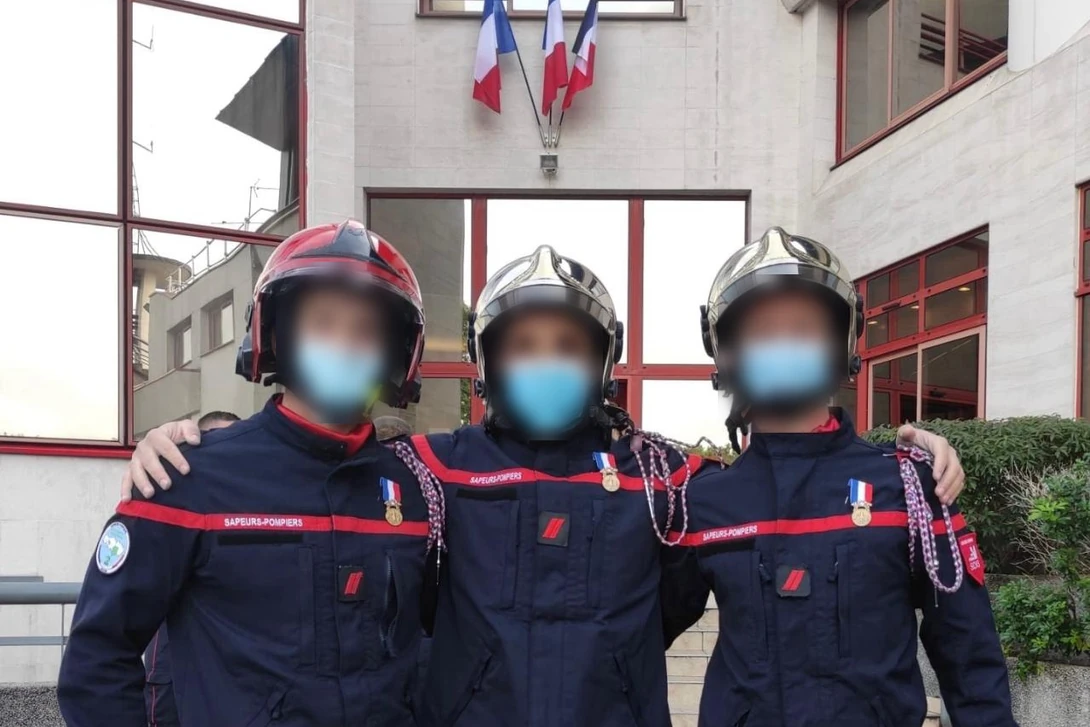 Fire station
Three schools of rescue
These three schools do not teach the same thing. Together they cover casualty care, fire and response in degraded environments. You know who is coming to your site before he arrives.
Military Paramedics specialising in extraction in high‑risk areas. First aid and marksmanship instructors. Parachute nurses and flight nurses, used to the patient who is monitored through hours of flight. Limited resources, distant evacuation, fast decisions: that is where tactical casualty care and haemorrhage control come from.
Paris Fire Brigade From the brigade and the large fire stations of the Paris suburbs. Specialised in fire and casualty care, and trained to deliver SST, France's statutory workplace first‑aider certificate. Fires in confined and industrial environments, incidents with many casualties. That is where attack doctrine, hose deployment and progression in smoke come from.
Marseille Battalion The same fire and casualty care specialisms as their Paris counterparts, plus response on land, at sea and in the mountains. Some belong to GRIMP, France’s rope and confined‑space rescue unit, which reaches casualties at height, on cliffs and in confined spaces. That is where industrial and port firefighting, technological risks and classified installations come from.
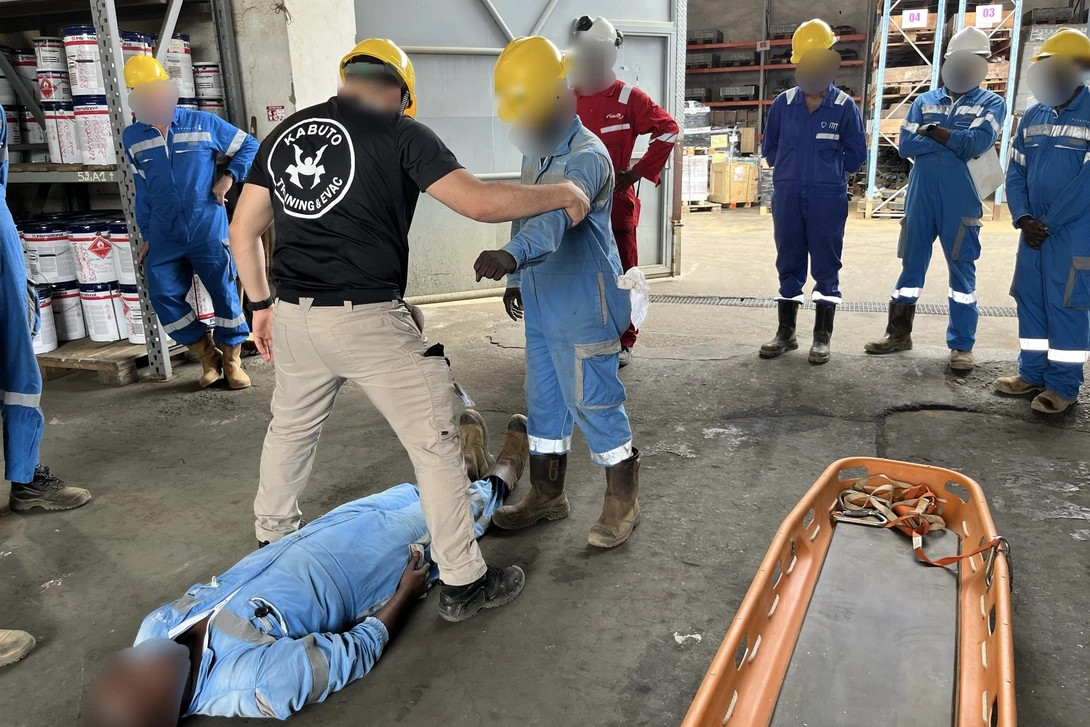
Nurse, former soldier
State‑registered nurse, specialising in emergency care, critical care and remote‑site medicine. Former military paratrooper nurse, then reservist. Volunteer firefighter for seven years, during which he was already training recruits.
Degrees State nursing diploma. Postgraduate diploma in air transport and medical repatriation, Sorbonne Université. Postgraduate diploma in critical care and emergency medicine, Sorbonne Paris Nord.
Credentials SST trainer under the INRS framework. NEBOSH IGC. PHTLS, ACLS, TECC. BOSIET and HUET, CA‑EBS, H2S, ICS FEMA.
Field Nine operational deployments and more than 350 medical evacuations. Emergency response on remote sites in Central Africa and the Sahel, including writing a medical emergency response plan and running mass casualty exercises.
The qualifications we hold
We display no client logos and no invented testimonials. What we display are the qualifications we hold, and we send copies of them before every mission.
Training Certified as SST trainer under the INRS framework. Training provider activity declaration 93132537313. NEBOSH IGC, the international certificate in occupational health and safety.
Emergency PHTLS, prehospital trauma life support. ACLS, advanced cardiovascular life support. TECC, casualty care in a tactical environment. State nursing diploma.
Repatriation Postgraduate diploma air transport and medical repatriation, Sorbonne Université. Postgraduate diploma critical care and emergency medicine, Sorbonne Paris Nord.
Remote site BOSIET and HUET, offshore survival and helicopter escape. CA‑EBS, emergency breathing system. H2S. ICS under the FEMA framework. Boat landing STCW.
Every qualification is sent as a copy before the mission, with the professional liability insurance certificate of the trainer who comes. If a document is missing, tell us before signing, not after.
Several trainers, not just one
KABUTO calls on firefighter and military trainers according to the need. On a session with a large headcount, we run several groups in parallel rather than spreading the training over weeks and tying up your production.
The rule that drives the calculation is the one in the SST framework: 10 trainees maximum per session and per trainer. Beyond that, a second group is required. Tell us your total headcount and the window you have, and we tell you how many trainers we commit and over how many days.
Each trainer is introduced to you before the session, with their in‑date qualifications and their professional liability insurance certificate.
Before and after
Sent before the mission
- The name of the trainer who will come, not one from a catalogue
- Copies of their in‑date qualifications
- Their professional liability insurance certificate
- The programme matched to your risks, not a copied framework
Handed over after the session
- A named certificate of attendance for each trainee
- Their individual assessment sheet
- The report on the gaps found in your arrangements
- The recommendations, ranked by urgency
A need, a date, a headcount
Just tell us where you are and how many people are involved. We usually reply within 48 working hours.