
Skip to content
KABUTO Training & Evac

FR EN

Request a quote
Medical repatriation · remote and high‑risk areas

Collecting your patient where it gets difficult.

Medical repatriation from remote sites and high‑risk areas. A French nurse, used to conflict areas in uniform and to remote sites in the private sector, who goes to collect the patient with his own equipment and escorts them to the receiving bed. Medical control and ticketing stay with you.

State‑registered nurse Remote and high‑risk areas Rapid departure from Marseille

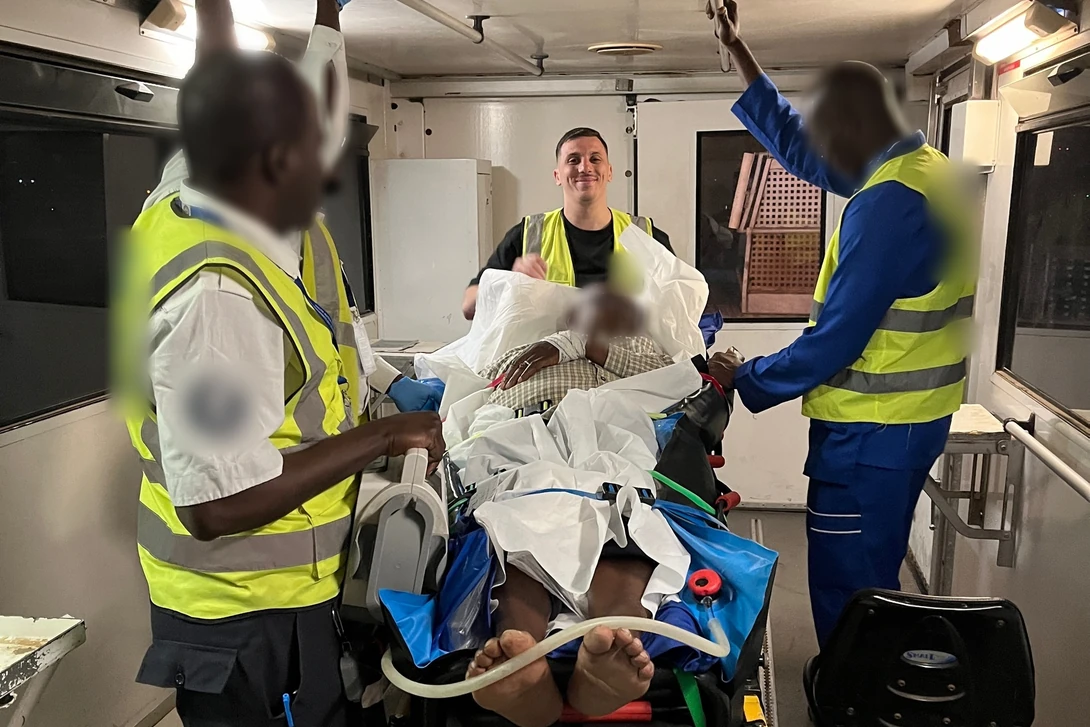
Patient settled on a stretcher and monitored during a medical repatriation Repatriation under way

40transfers in high‑risk areas

350+evacuations in uniform

49repatriations for assistance companies

17countries and territories

Our exact place

Our scope, no blur

Many providers leave their scope unclear. Ours is written here, before any discussion of price.

What we bring

  • A state‑registered nurse deployable anywhere in the world
  • Care of the patient on site, through to the receiving bed
  • Our own mission equipment, matched to the transport asset and the duration
  • Working as a pair if you add a physician
  • A written report delivered within 24 hours of arrival

What we are not

  • A medical control centre: medical control stays yours
  • A travel agency: tickets and permits stay with you
  • An airline: we have no aircraft
  • A call centre open around the clock
  • An insurer: we do not cover the costs
Our ground

Repatriation in high‑risk areas

Bringing a patient back from Malaga or Lisbon, many can do that. Going to collect them from a remote site in the Sahel or in a city under tension is another job. It is the one we learned in uniform.

01

Military

More than 350 medical evacuations in uniform, on theatres of operations. Nine deployments. Mopti, Timbuktu, Gao, Niamey, Madama, Abéché. Also Senegal, Burkina Faso, Ivory Coast, the Central African Republic, Djibouti and Lebanon. Helicopter and aircraft, in degraded conditions and under security constraints.

02

Private sector

More than 40 patient transfers. For private security companies and remote industrial sites. Mali, Niger, Chad, the Democratic Republic of the Congo, Rwanda.

03

Assistance companies

49 missions in 2024 and 2025, across 17 countries. From scheduled flights to the air ambulance. The documentary rigour of a French medical coordination centre, applied on difficult destinations too.

Every deployment remains subject to local clearances and to the security situation at the time. We tell you before committing to a date, not after. Missions carried out in uniform fall under national defence secrecy and are not detailed.

The transport assets

What we are used to

The choice of transport asset belongs to your medical control. Here are those on which a patient has already been entrusted to us, in civilian work as in uniform.

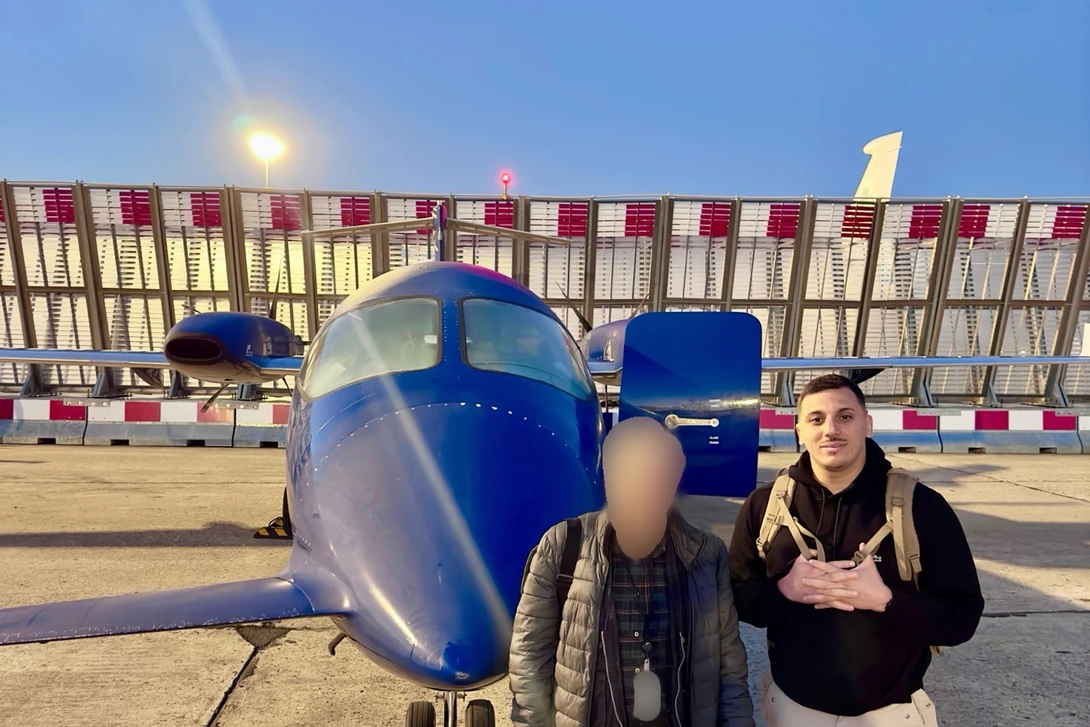
Hary on the tarmac, in front of the air ambulance
On the tarmac, in front of the air ambulance

In civilian work

Air ambulanceA private medical jet goes to collect the patient and brings them back, usually within the day. For intubated, ventilated and sedated patients, or when, from where the patient is, it is the simplest solution for the assistance company, logistically and financially.

Stretcher on a scheduled flightDepending on the aircraft, about 9 seats are folded down at the rear of the cabin and the stretcher is installed on top. The other passengers travel around it. For the patient who must stay lying down for the whole flight.

Extra seatAn additional seat booked in front of the patient, who rests their outstretched leg on it during the flight. For lower‑limb injuries.

Scheduled flightScheduled flight, usually in business class. The nurse travels next to the patient and monitors them throughout the journey. This is the most common repatriation.

Ambulance for the whole journeyThe whole journey is by road: no airport nearby, a patient whose condition does not allow them to fly, or a patient who no longer has the identity documents to board.

In uniform

HelicoptersNH90, Caracal, Puma

AircraftBeechcraft, CASA CN235, Transall C160, Hercules C130

Medical evacuation in tactical conditions, from the collection point through to Role 2. Packaging for a long flight, continuous monitoring in the hold as in the cabin.

What we take with us

We leave with our own bag

A nursing response bag checked item by item before every departure, sized to last several hours without resupply. We do not rely on the equipment of the transport asset.

MonitoringPulse oximeter, blood pressure monitor, capillary blood glucose meter, thermometer.

AirwayBag valve mask, airways, non‑rebreather mask, nasal cannulae and oxygen connectors.

Venous accessCannulae in several gauges, giving sets, three‑way taps, fluids for resuscitation.

Haemostasis and dressingsTourniquet, sterile gauze, support bandages, pressure and occlusive dressings.

Hygiene and protectionSterile and non‑sterile gloves, antiseptics, sharps container, clinical waste disposal.

The medicines for the mission are prescribed and supplied by your controlling physician. We administer them on his prescription and report on them in writing. We do not build a drug stock of our own accord.

Who it is for

Two situations, two answers

We work for assistance companies and employers, never directly for private individuals.

01

An escort, quickly

Insurers and assistance companies

You have the case, the transport asset and the budget. What you are missing is a state‑registered nurse free on the date, able to leave quickly and to give you a clean written report.

  • State‑registered nurse, qualifications up to date, supporting documents sent before the mission
  • Deployable anywhere, including destinations classed as high‑risk
  • Used to the procedures and documentary requirements of medical coordination centres
  • Departure from Marseille at short notice, as a pair with your physician if needed
  • Written report handed over within 24 hours of arrival
02

An employee has to come home

Companies and NGOs

Your employee is in hospital abroad. Your insurer or your assistance company runs the case, but a nurse is needed to escort the patient on the journey, and sometimes into a country where nobody wants to go.

  • Nurse escort from departure through to the receiving bed
  • We fit into the case set up by your assistance company
  • High‑risk areas as well as standard destinations, several continents
  • A single contact, from the first message to the written report
Areas of operation

17 countries and territories

The 17 countries of the missions for assistance companies, in 2024 and 2025. In uniform: Mali, Niger, Senegal, Burkina Faso, Côte d’Ivoire, Central African Republic, Djibouti and Lebanon.

  • France
  • Spain
  • Morocco
  • Guadeloupe
  • Saint‑Barthélemy
  • Portugal
  • Italy
  • Tunisia
  • Senegal
  • Canada
  • Argentina
  • Turkey
  • French Polynesia
  • India
  • Austria
  • Philippines
  • Iceland
From your call to the handover

How a mission runs

Five steps, always the same. You keep control of medical regulation and logistics, we take care of the patient.

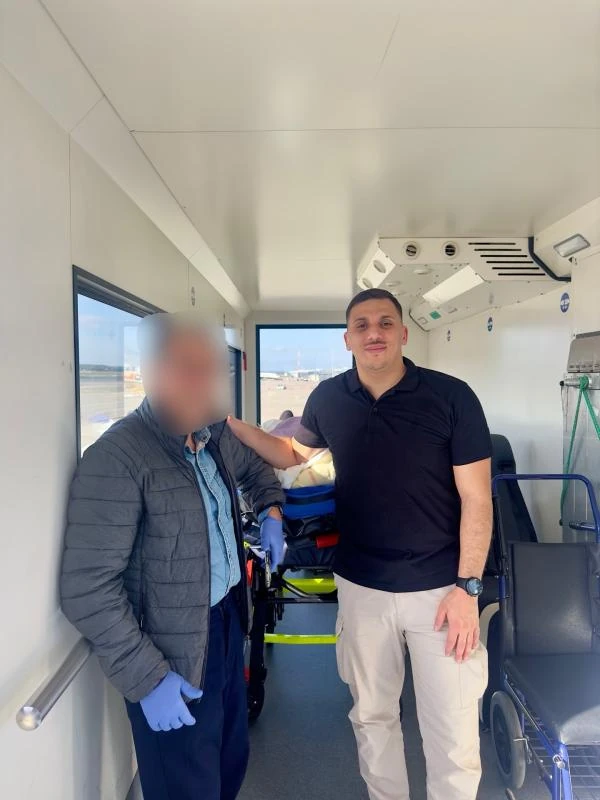
Hary in the cabin, patient settled on a stretcher
In the cabin, patient settled
  1. Your requestYou write to us with the destination, the date and the patient’s condition. We confirm our availability and send our current credentials with that confirmation.
  2. Your medical control decidesYour controlling physician qualifies the need and chooses the transport asset. We receive the medical file, we prepare the equipment accordingly and we ask our questions if any remain.
  3. You set up the missionTickets, permits, ambulances at both ends: your assistance coordinator keeps control of all the logistics. We fit in with your timings and your constraints.
  4. We set offThe nurse leaves with his equipment, collects the patient on site and takes care of him through to the receiving bed. Continuous monitoring, care throughout the journey. If you wish to add a physician, we work as a pair.
  5. The handoverWritten assessment handed to the team receiving the patient, and a written mission report for you. Nothing is lost between departure and arrival.
Availability and current credentials

A date, a destination

Tell us where the patient is and when he has to leave. We confirm our availability and send our credentials straight away.