Six fields
Where we work
If your business is not on this list, write to us anyway: the method does not change, only the scenarios change.
01
Mining, quarrying and extractive industries
Heavy plant, working faces, dust, conveyors, and a health centre often several hours of track from the nearest hospital worth the name.
What we cover there
- Crush, burial, fall from height, flying debris
- An emergency response team able to lift and package a casualty on its own
- Mass casualty exercises in your real work areas
- Rotating sessions so operations never stop
Where to start The Emergency response team pack, block 1 then block 2.
02
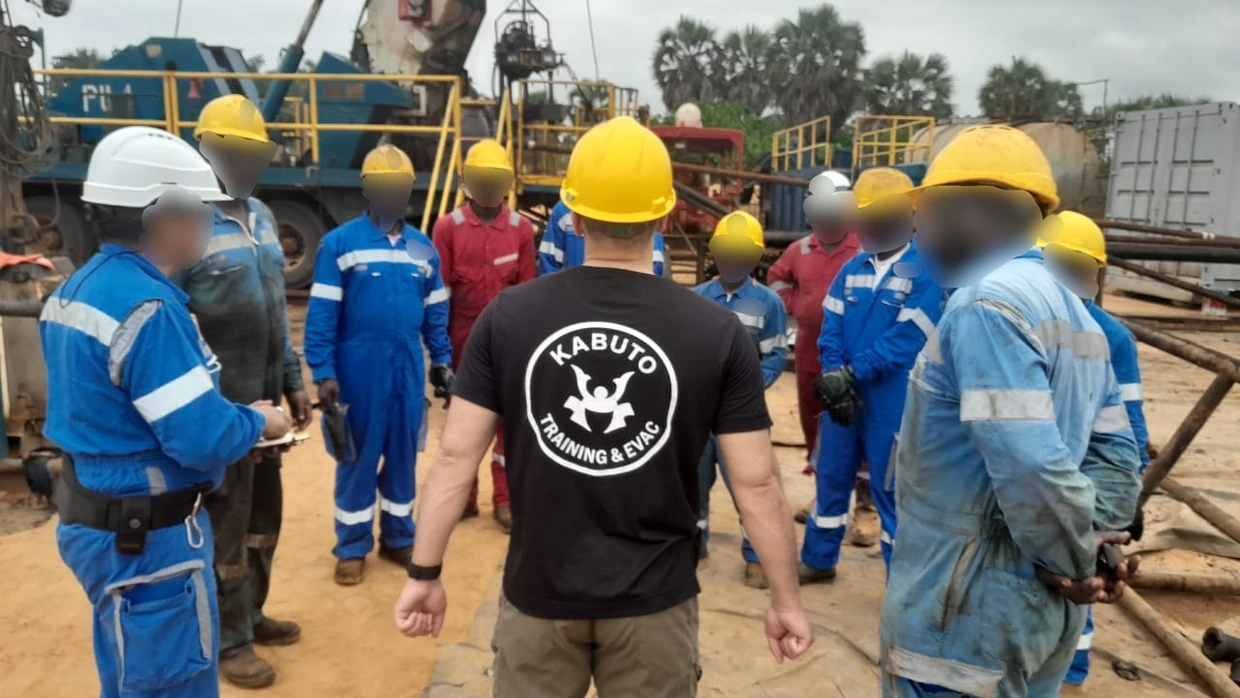
Oil and gas, onshore and offshore
Explosive atmospheres, H2S, work at height, confined spaces, and an international client who will audit your arrangements before signing.
What we cover there
- Pool fire, ignited gas leak, wearing SCBA
- Rescue in confined spaces and in total darkness
- Casualty care at the foot of a well, extraction and stretcher carrying over rough ground
- SST certificate under the INRS framework, recognised by your auditors
Where to start The full Fire pack, plus SST for the rest of the site.
03
Logistics, ports and materials handling
Warehouses, docks, forklifts, suspended loads. The most frequent risk is not spectacular, it is the back, and it is the one that costs the most over a year.
What we cover there
- Manual handling analysed at your real workstations, not on crates
- Casualty lifting and stretcher carrying in narrow aisles
- Lead marshal, sweep marshal and unannounced evacuation exercise
- Using fire extinguishers, for all staff
Where to start Manual handling, SST, and the evacuation exercise.
04
Healthcare and ambulance crews
You know how to treat. What we pass on are firefighter and road rescue techniques, to do the same work in a ditch or on a worksite.
What we cover there
- Assessment and packaging of the multiple‑trauma casualty
- Long spine board, scoop stretcher, vacuum mattress, traction splint
- Emergency extrication from a vehicle, casualty lifting with several carriers
- Packaging for a long transport and handover to the receiving team
Where to start The Prehospital trauma care pack, 3 days.
05
NGOs and international organisations
Teams that go far away, into countries where the public emergency chain cannot be plan A, and that have to hold on their own while the evacuation is arranged.
What we cover there
- First aid on remote sites and prolonged care of a casualty
- Severe bleeding and tourniquet in tactical casualty care
- Preparing the evacuation file and the handover
- First aid for expatriate families
Where to start Remote‑site first aid, tactical casualty care, and the families module.
06
Building, civil engineering and worksites
Article R4224‑15 of the French Labour Code is explicit: a trained first‑aider on every worksite employing at least 20 workers for more than 15 days where dangerous work is carried out.
What we cover there
- Fall from height, crush, deep wound, electric shock
- Raising the alarm and guiding the emergency services to the exact spot
- Immobilisation and casualty lifting on unstable ground
- SST under the INRS framework to cover the obligation
Where to start SST and SST refresher (MAC SST), plus casualty lifting.